Photographs and the gradually emerging truth
Maigret and the Dead GirlPhotographs and the gradually emerging truth describes how images help Maigret identify Louise Laboine while also revealing the limits of seeing. A newspaper likeness, a carefully reconstructed portrait, and the developing image in Maigret’s mind each make her more legible, but none is the truth by itself. Her identity takes shape through recognition and memory, then becomes more credible as visual impressions are tested against material evidence.
Constructing a Likeness
At first, Maigret sees the dead woman through details that seem to place her in a familiar category: a worn, tawdry blue dress and a silver high-heeled shoe with a worn sole. He considers whether she might be one of the bar girls who worked in Montmartre nightclubs. Yet the missing shoe and coat do not fit the simple possibility of a street attack followed by a theft. The visible clues suggest a type, but their inconsistencies make that first interpretation unstable; Maigret concludes that she must have been killed elsewhere.
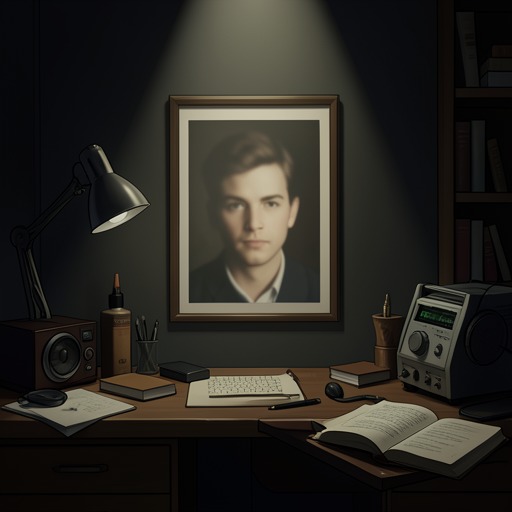
To give the investigation an image people might recognize, Maigret directs that a model try on the dead woman’s dresses and be photographed. The Technical Branch’s photographer is to make a separate portrait of the dead woman with makeup, then combine the images so that her face appears on the model’s body. The procedure is a practical reconstruction rather than a straightforward photograph: it aims to show Louise as she might have looked alive and dressed, instead of as she appeared at the crime scene or on the slab at the Medico-Legal Institute.
The first newspaper photograph does produce a recognition. The evening papers’ first edition, published at about one o’clock, carries the same picture as the morning papers. Although Louise is bruised in the image, Mademoiselle Irène recognizes her at once, despite having seen her only twice. That response shows the photograph’s usefulness, but also how dependent recognition is on a viewer’s limited personal knowledge. Mademoiselle Irène can identify a face she has encountered briefly; the image does not, by itself, tell the police who Louise was or how she came to be there.
From Public Image to Person
The later photographs make a stronger impression on Maigret. They present Louise not under flashlights at Place Vintimille or on the marble slab at the Medico-Legal Institute, but as she might have appeared when she visited Mademoiselle Irène’s shop. In two proofs she wears her black dress; another shows her in her brown checked coat, and the last presents her in evening dress. The different versions place the same face in distinct circumstances, bringing her clothing and possible movements into the investigation without turning any one image into a complete biography.
The photographer gives her eyes a lifelike expression that seems to pose a question without supplying an answer. Calling her simply pretty would miss what Maigret notices: the portrait suggests an individual presence that the earlier images had obscured. The imagined figure moves through Paris, briefly pausing before a shop window and then continuing toward an unknown destination. Yet this evocation remains an imaginative bridge from photograph to person, not proof of where she went or what she intended.
The images also sharpen the contrast between having once been known and being remembered now. Louise had parents, school friends, and people who spoke with her and called her by name. Yet after her death, no one seems concerned, as though she had never lived. The photographs make her visible to strangers, but visibility is not the same as social recognition: a face can circulate in the papers while the life behind it remains almost entirely unclaimed. When Maigret asks a woman whether she recognized Louise in the newspaper, she hesitates and lies, saying she was unsure. The photograph can prompt recognition, but it cannot compel an honest account.
The Image Developing in Maigret’s Mind
The investigation’s central metaphor makes the process explicit: Louise is like a photographic plate placed in developer. Two days earlier, Maigret knew nothing of her. She then appeared first as a blue shape against the wet pavement at Place Vintimille, then as a white body at the Medico-Legal Institute. Now she has a name, and a picture is forming, though it remains dim. The comparison describes more than the arrival of a portrait. Each new clue brings features into view while leaving the whole still uncertain.
Even after the photographs have clarified her appearance, Maigret’s reconstruction of Louise’s recent movements remains a series of questions. He considers whether she might have been trying to find Jeanine Armenieu during a period when she had no regular work, and whether she had learned of Jeanine’s wedding to Marco Santoni from a newspaper announcement. If so, she may have gone to Mademoiselle Irène’s shop for an evening dress after reading the notice. The known times—the shop visit after nine and her departure around ten—leave an interval before the wedding reception at the Roméo. The image of a woman preparing for an occasion helps organize these possibilities, but does not settle what happened during that gap.
Testing What the Pictures Suggest
Maigret’s changing understanding depends on setting appearances beside evidence that photographs cannot provide. Dr. Paul’s report establishes that Louise died from a skull fracture caused by several blows. Dark wool fibers beneath her fingernails indicate that, before she fell, she had clutched at someone’s clothing. These findings change the meaning of the initial scene: the body’s clothes might suggest a familiar nightlife stereotype, but the medical examination supplies evidence of a struggle and of contact with another person.
The same discipline corrects a false account of Louise’s behavior. Her stomach contained an appreciable quantity of alcohol, but the head waiter said she had little opportunity to drink during her short stay at the Roméo. Maigret considers that she might have been drinking beforehand to give herself courage, or afterward, between leaving the reception and being found. Later, when assessing Albert Falconi’s story, he points out that the published postmortem report mentioned alcohol but not its kind: the drink was rum, whereas a martini would contain gin and vermouth. Falconi had assumed Louise would sit at the bar, order a martini, and go downstairs to read her letter; Maigret’s account of how out of place she would have felt there, and the difference in the drink, undermine that version. The photographs help Maigret recognize and imagine Louise, while the medical and circumstantial evidence tests what others claim about her. The truth emerges not from a single revealing picture, but from repeated revision of the picture already formed.